Double Decker Living Root Bridge Trek: A Complete Nongriat Guide
Meghalaya's double decker living root bridge sits in Nongriat, down 3,500 steps from Tyrna. Trek times, best season, what to carry and how to get to the trailhead.
By Meghalaya Team
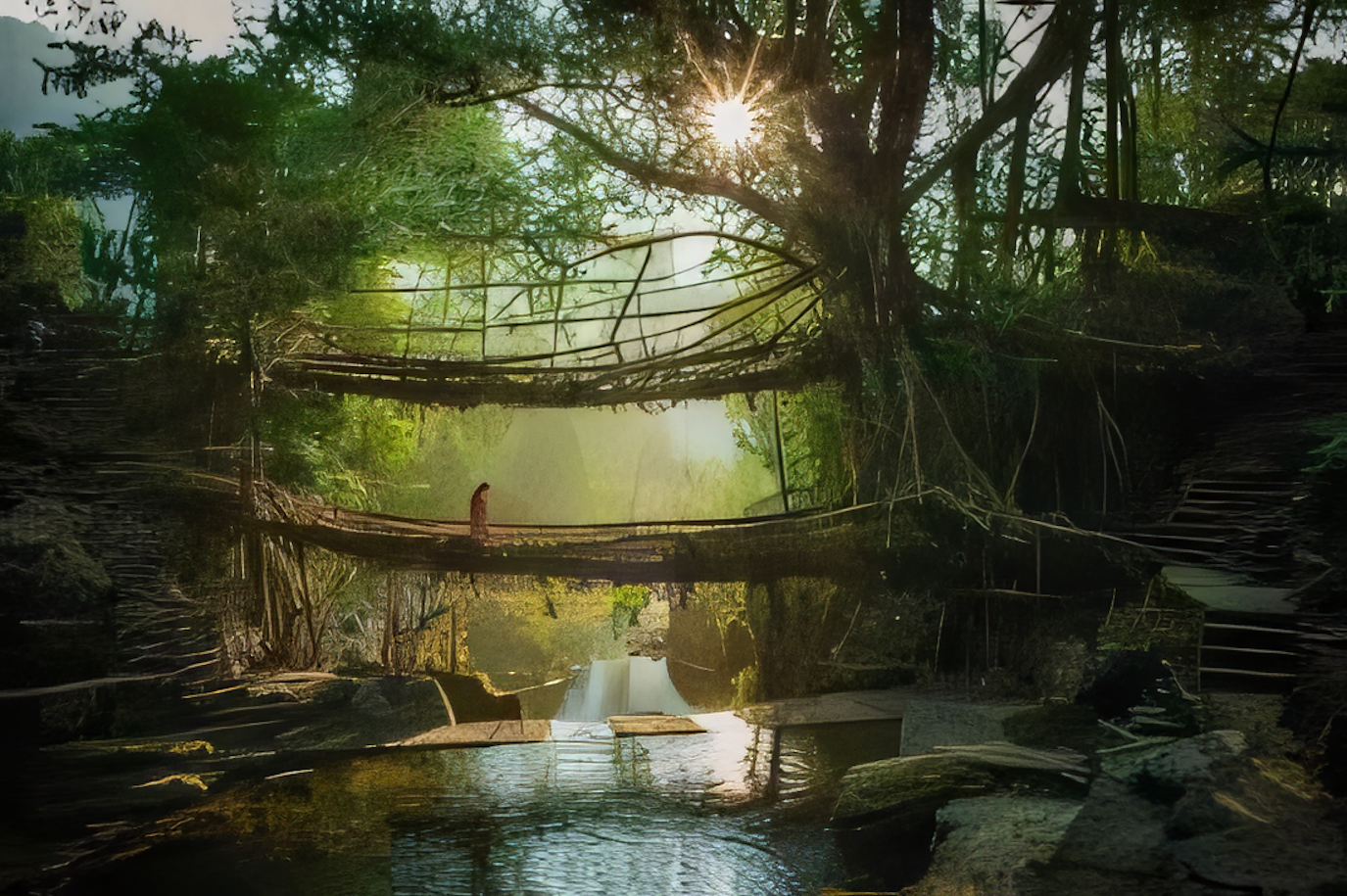
The double decker living root bridge in Nongriat is the single most famous sight in Meghalaya, and the only place on earth where you will find two bridges of living roots stacked one above the other. It is not built. It is grown — and reaching it takes a trek that most people remember for the rest of their lives.
What is a living root bridge?
For generations the War-Khasi people of Meghalaya have trained the aerial roots of the Ficus elastica, the Indian rubber fig, across streams and gorges. The roots are guided over bamboo scaffolding, and over fifteen to thirty years they thicken, knit together and harden into a bridge strong enough to carry dozens of people. Because the tree is alive, the bridge grows stronger every year instead of rotting away. Some root bridges in Meghalaya are believed to be well over a century old.
Where is the double decker root bridge?
It sits in the village of Nongriat, below Cherrapunji (officially called Sohra), in the East Khasi Hills. The trek starts from Tyrna village, about 12 km from Sohra and roughly 70 km from Shillong. There is no road to Nongriat — the only way in is on foot.
The trek: what to actually expect
From Tyrna you descend roughly 3,500 concrete steps into the gorge, cross two swaying steel suspension bridges over the river, and climb a short final stretch up to Nongriat. Going down takes most people 1.5 to 2.5 hours. Coming back up is the hard part and takes 2.5 to 4 hours, because it is a relentless staircase climb with very little flat ground.
You do not need to be an athlete, but you do need working knees and patience. Take it slowly, rest often, and do not try to rush the climb back.
Rainbow Falls: the extra reward
About 1.5 hours further on from Nongriat is Rainbow Falls, a tall blue plunge pool that throws a rainbow in the morning light. Going there turns a day trip into a long day — start by 6 am, or better, stay the night in Nongriat.
Should you stay overnight in Nongriat?
Yes, if you can. Nongriat has a handful of simple guesthouses run by local families. Staying a night means you can swim in the pools, walk to Rainbow Falls without racing the clock, and climb out fresh the next morning instead of exhausted the same evening. Rooms are basic, electricity is limited, and you should carry cash.
Best time to do the Nongriat trek
October to April is the most comfortable window — the steps are dry, the air is cool and the river runs clear. June to September is monsoon: the waterfalls are at their most spectacular, but the steps turn slippery, leeches come out, and the climb is far harder. If you come in the rain, carry a poncho and wear shoes with real grip.
What to carry
Grippy trekking or running shoes, at least two litres of water, light snacks, a dry bag or poncho, cash for the small entry fees and village shops, and salt or a leech repellent if you are trekking in the monsoon. Leave heavy luggage back in Sohra or Shillong.
How to reach Tyrna, the trek start point
Most travellers base themselves in Cherrapunji or Shillong and drive to Tyrna in the morning. There is no reliable public transport to the trailhead, so a pre-booked taxi that waits for you is by far the easiest option — you will not want to hunt for a ride after climbing 3,500 steps. You can book a verified vehicle with a local driver on this site, and find a stay in Sohra or Shillong for the nights either side of the trek.
Single decker root bridge: the easier alternative
If the Nongriat climb sounds like too much, there is a beautiful single-decker living root bridge at Riwai, right next to Mawlynnong, Asia's cleanest village. It is a five-minute walk from the road and makes an easy half-day trip from Dawki or Shillong.